40+ jaar expertise in laboratoriumapparatuur
Service & onderhoud door gecertificeerde specialisten
From reagents and vaccines to biological samples and cell material: Poly Temp Scientific supplies, installs and maintains cold storage equipment for laboratories across the Netherlands. Solutions from +8°C to -196°C.
Laboratory cold storage differs fundamentally from standard domestic refrigerators and freezers. While a household appliance tolerates temperature fluctuations of several degrees, laboratories require precise temperature stability, controlled air distribution and continuous monitoring. Even minor temperature deviations can irreversibly damage sensitive samples, reagents or vaccines.
Professional laboratory refrigerators and ULT freezers are equipped with advanced compressor technology, alarms for temperature deviations, data logging for compliance and robust insulation that maintains temperature stability even during frequent door openings. The right choice of equipment depends on the sample type, frequency of use and applicable regulatory requirements in your sector.
Poly Temp Scientific advises you on the optimal solution: from straightforward laboratory freezers to complete cryogenic storage systems with remote monitoring and LN₂ level management.
Five specialised product groups, each designed for specific temperature ranges, applications and regulatory requirements in professional laboratory environments.
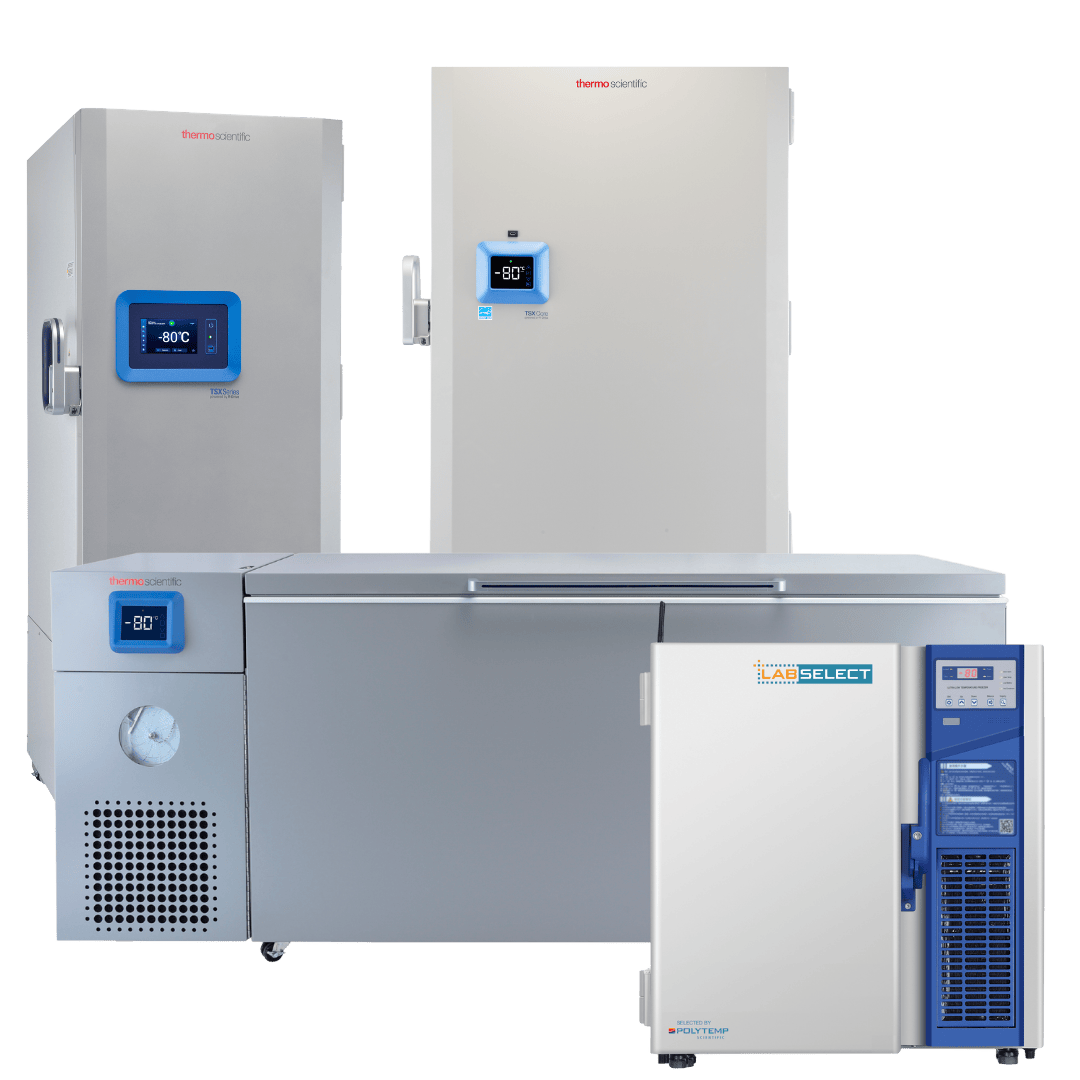
Long-term storage of sensitive biological samples, DNA/RNA, cell material, vaccines and reference materials at ultra low temperatures.
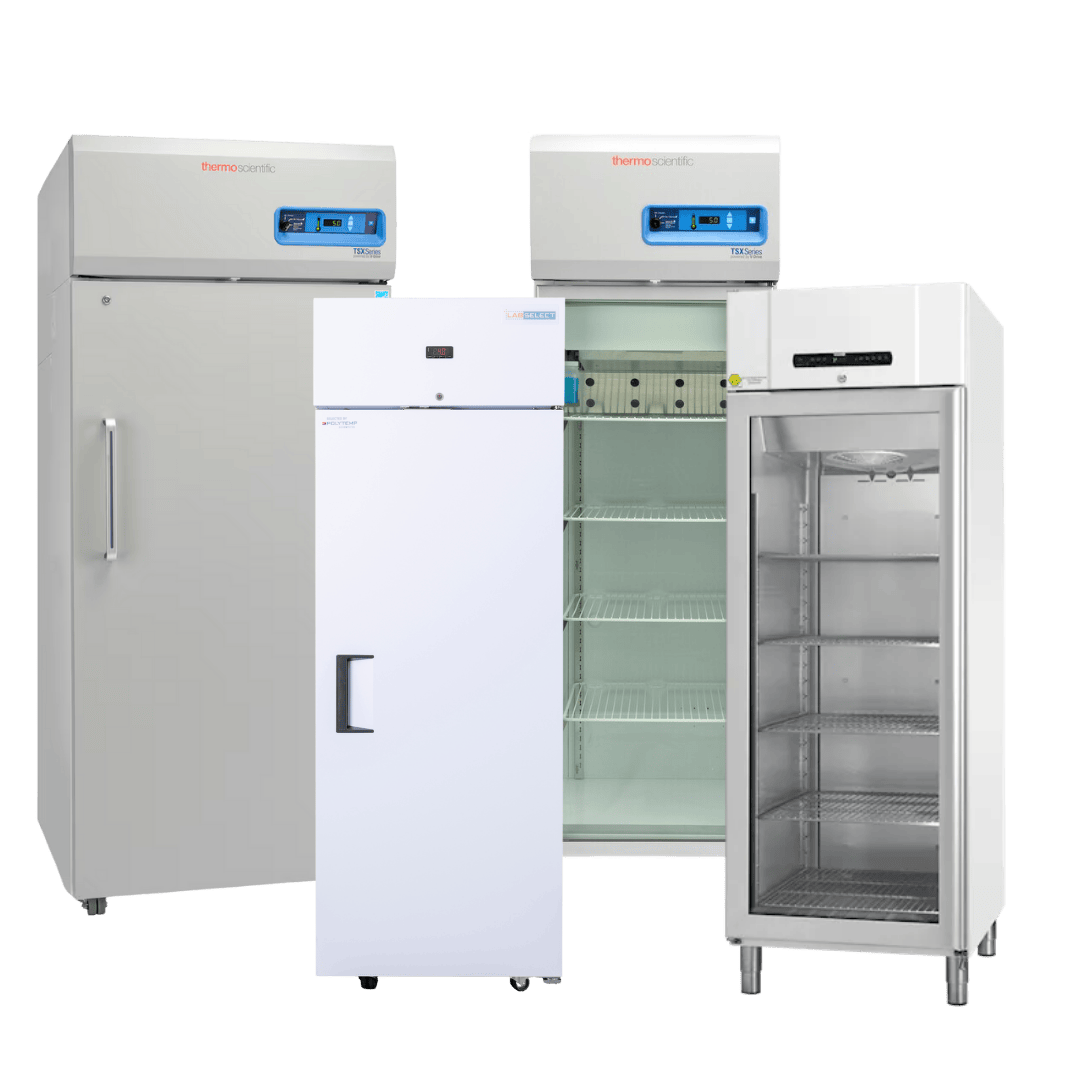
Precise refrigerated storage for reagents, media, medication, blood products and daily laboratory samples.
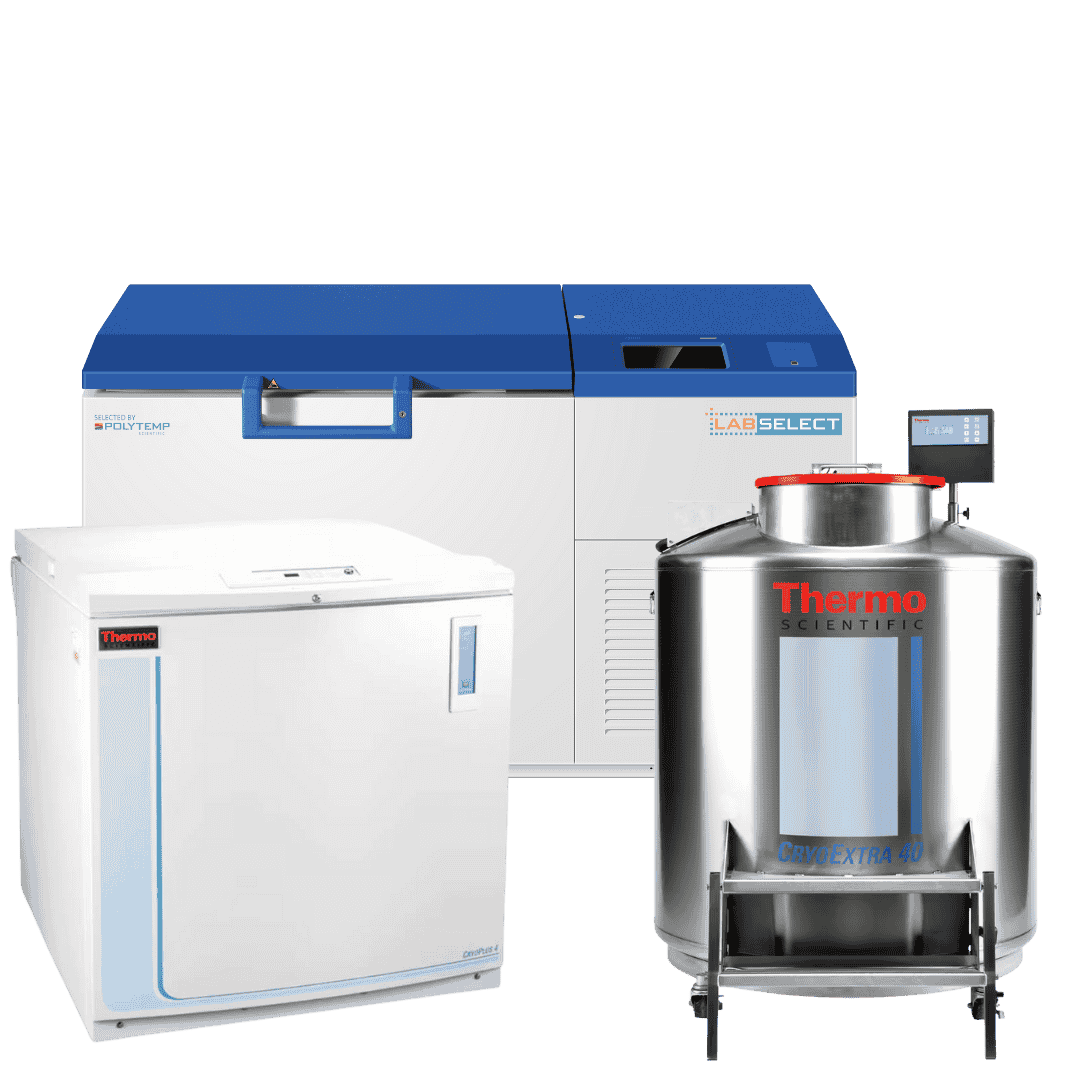
Long-term storage of cells, tissue, biobank material and sensitive samples in liquid nitrogen or vapour phase.
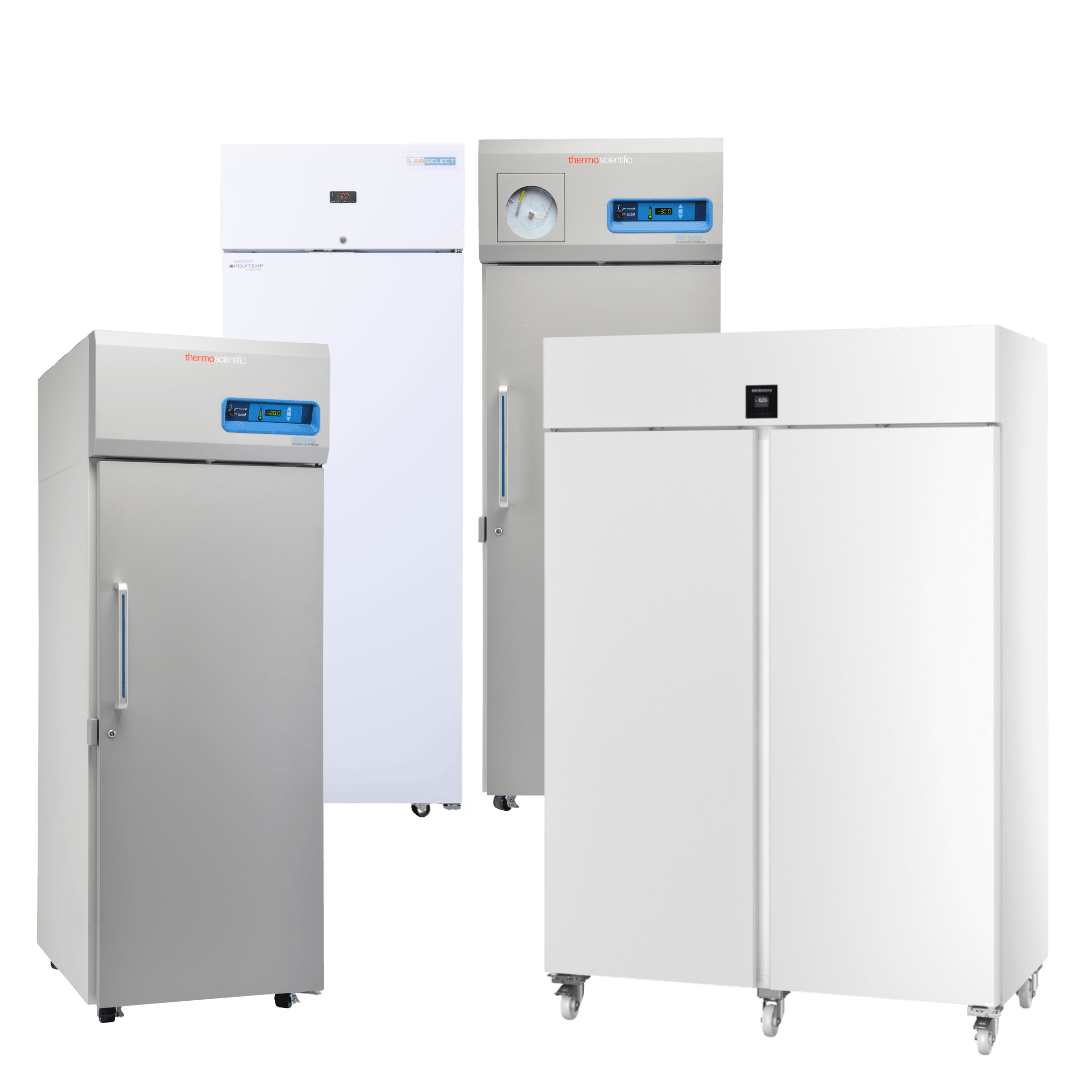
Reliable frozen storage for products and samples that do not require ULT or cryogenic storage, but still need professional temperature stability.
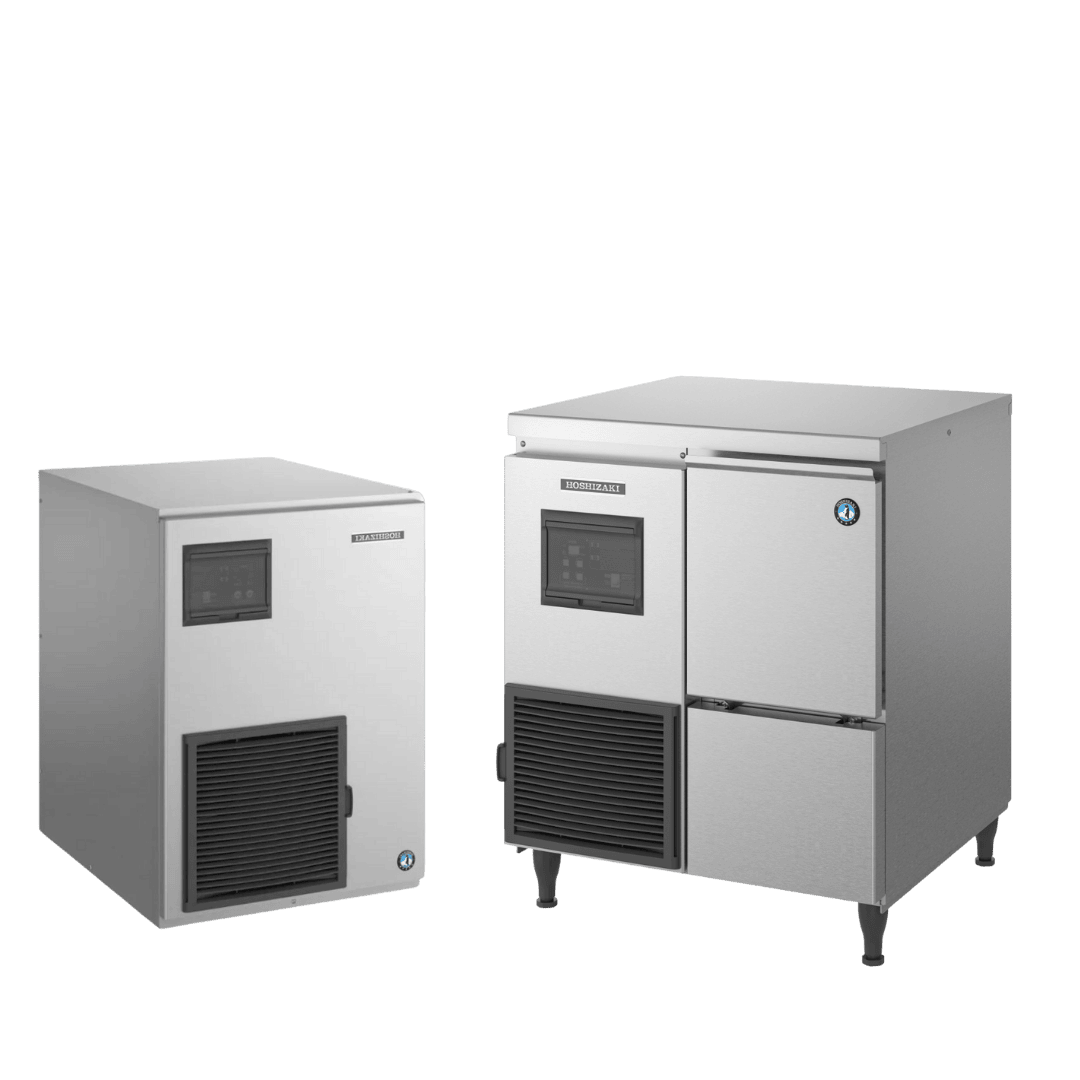
Professional production of flake ice for cooling samples, tubes and containers during laboratory procedures and sample preparation.
Laboratory cold storage spans a broad spectrum of temperature management: from refrigerated storage of daily reagents to long-term preservation of cell lines in liquid nitrogen at -196°C. Choosing the right solution depends on four factors: the sample type, required storage duration, frequency of access and applicable regulatory requirements in your sector.
A common mistake is underestimating the impact of temperature fluctuations. A standard domestic freezer can experience a temperature rise of 10 to 15°C when the door is opened. In a professional ULT freezer, recovery time is minimal thanks to powerful compressor technology and robust insulation, which is critical for the integrity of sensitive biological samples.
Temperature monitoring, data logging and alarm systems are not optional extras but essential requirements. Both pharmaceutical and medical diagnostic applications are subject to strict requirements for the registration of temperature data for validation, audits and quality assurance in accordance with DIN 13277 and GDP guidelines.
Refrigeration (+2 to +8°C) for daily use, standard freezing (-10 to -40°C) for shorter storage periods, ULT (-40°C to -86°C) for long-term biological storage and cryogenic (-196°C) for permanent preservation of cell lines and tissue samples.
Professional equipment continuously records temperature data with timestamps. This is essential for quality audits, GDP compliance and validation documentation. Remote monitoring with SMS alarm prevents sample loss during technical failures.
The appropriate storage temperature depends on the sample type and intended storage duration. Vaccines and blood products typically require +2 to +8°C with strict uniformity, while sensitive biological materials may require -80°C or cryogenic conditions. Expert advice is always recommended.
Incorrect storage leads to sample degradation, loss of valuable and often irreplaceable research material, regulatory non-compliance and, in pharmaceutical applications, potential product safety risks. Investing in the right equipment pays for itself.
Poly Temp Scientific serves a wide range of sectors with specific cold storage requirements. Identify your situation and explore the most relevant solutions.
Hospital laboratories and diagnostic centres work with blood products, tissue samples, reagents and medication. Temperature continuity and traceability are critical in this environment.
Scientific research demands reliable, long-term storage of unique and often irreplaceable research material. From -20°C to -196°C, with monitoring and backup solutions.
GMP-compliant storage with full traceability and validation. GDP requirements, validation mapping and qualification documentation are everyday practice. Poly Temp supports the entire process.
Distribution centres and logistics service providers in the life science sector require scalable, reliable cold storage with continuous temperature monitoring and audit trails.
Microbiological analysis, shelf-life testing and quality control in the food sector require stable temperature conditions for reliable test results and product safety.
Seed and crop research, plant growth experiments and agrochemical quality control require climate-controlled storage of starting materials and test samples.
Six critical selection criteria that determine which solution best suits your laboratory, your samples and your regulatory requirements.
Determine the required temperature range based on your sample type. Consider the minimum and maximum setpoint temperature, uniformity throughout the compartment and the precision of temperature control (±0.5°C vs ±2°C).
How quickly does the temperature recover after the door is opened? This is critical in frequently accessed equipment in active laboratories. ULT freezers with dual compressor technology perform significantly better than single-compressor models.
Built-in temperature logging with timestamps, visual and audible alarms for deviations, and if required remote monitoring via network or GSM. Essential for GDP, GMP and ISO 15189 compliance.
Net internal volume, adjustable shelf or drawer configuration and compatibility with rack and box systems for organised sample storage. Consider future expansion of your biobank or sample collection.
Which standards apply: DIN 13277, GDP, ISO 15189 or PGS 9 for cryogenic storage? Does the equipment include validation documentation, IQ/OQ protocols and is it suitable for temperature mapping?
ULT freezers are significant energy consumers. Consider the annual energy consumption (kWh/year), energy rating and modern energy-saving technologies such as variable compressor speed and improved insulation materials.
Laboratories in the Netherlands operate under strict quality and safety standards for cold storage. Understanding the relevant standards helps you select the right equipment and demonstrate compliance during audits and inspections. Poly Temp proactively advises you on which standards apply to your specific situation.
A widely recognised standard for laboratory and medical cold storage equipment. It describes minimum requirements for temperature uniformity, alarm systems, energy consumption and test methods for refrigerators and freezers used in medical and laboratory environments.
GDP ensures the quality and integrity of medicinal products during storage and distribution. It requires temperature-controlled storage, continuous monitoring with registration and audit trails, qualification of storage spaces and equipment, and periodic validation.
ISO 15189 is the international quality framework for medical laboratories. It sets requirements for the reliability of test results, in which stable storage of samples, reagents and calibration materials is a critical factor.
PGS 9 describes Dutch safety guidelines for the storage and use of cryogenic gases, including liquid nitrogen (LN₂). Relevant for laboratories with cryogenic storage systems, covering ventilation, oxygen detection and emergency procedures.
Our specialists advise you on the standards applicable to your sector and support you with the validation and documentation of your cold storage equipment.
Two widely used but fundamentally different technologies for the preservation of biological material at ultra low temperatures. Which one do you need?
Not sure which solution suits your specific samples? Our specialists are happy to advise you.
Request personal adviceULT freezers are well-known energy consumers. Modern models from Thermo Scientific and Gram offer significantly lower energy consumption figures thanks to innovative compressor technology and improved insulation.
There are several practical measures to reduce the energy consumption of your cold storage equipment without jeopardising sample integrity. Conscious management of loading, maintenance and setpoint configuration can deliver savings of 20 to 30% in practice.
A well-stocked freezer is more efficient than an empty one. Use sample racks and boxes to make the best use of space and minimise heat ingress.
Every door opening allows warm air to enter. Use internal storage boxes, colour or number coding for quick retrieval, and consider portioning your sample collection.
Blocked condensers, damaged seals or ice build-up on the evaporator significantly increase energy consumption. Preventive maintenance keeps your equipment running efficiently.
For some workflows, -70°C instead of -80°C may be considered. This can save 20-30% energy. This must always be validated based on your specific sample type and protocol.
Indicative savings based on experiences at laboratories in the Netherlands
Poly Temp Scientific offers far more than equipment alone. Our certified service engineers guide you from selection and installation through to validation, periodic maintenance and breakdown response. With our own repair facilities in Bolsward, we guarantee short turnaround times and professional support.
Independent advice on the optimal solution for your sample type, sector and budget
Professional installation by certified engineers, including connection and commissioning
IQ/OQ protocols, temperature mapping and complete qualification documentation for regulatory compliance
Fixed maintenance contracts that prevent breakdowns and extend the service life of your equipment
Rapid response to equipment failures to minimise the risk of sample loss
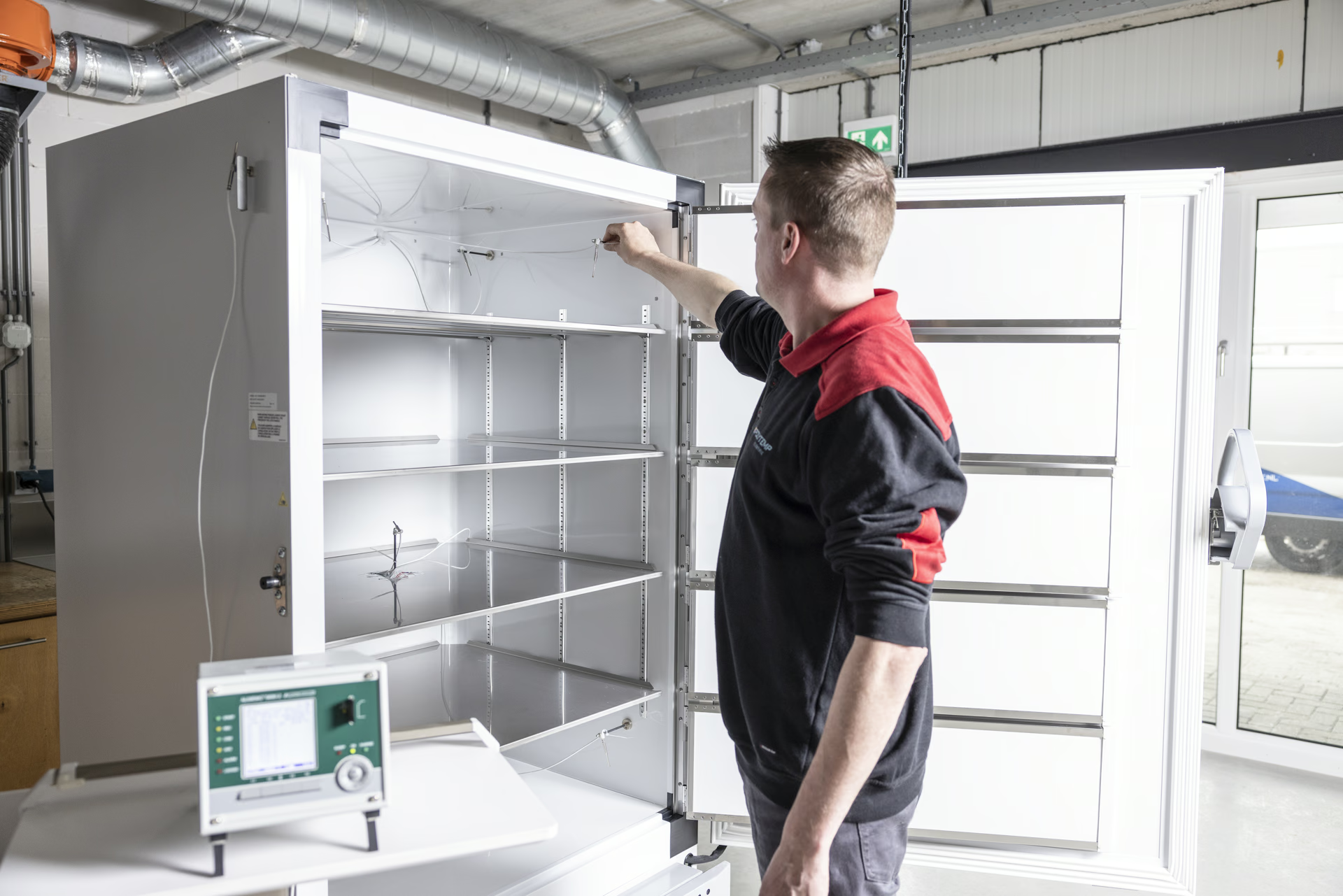





Answers to the most common questions about cold storage equipment for laboratories.
A laboratory refrigerator is designed for precise temperature stability (+2 to +8°C), uniform air distribution, built-in alarms for deviations and data logging. Domestic refrigerators lack these features and are unsuitable for storing samples, reagents or medication in professional environments.
A ULT freezer (-40°C to -86°C) is required for the long-term storage of biological samples such as DNA, RNA, proteins and cell material that would degrade at higher temperatures (-10 to -40°C). A standard laboratory freezer is sufficient for shorter storage periods or less sensitive materials.
Cryogenic storage in liquid nitrogen (-196°C) is required for the long-term preservation of living cells, cell lines, stem cells, tissue samples and biobank material. At this temperature, all biological processes are arrested, enabling theoretically indefinite preservation.
This depends strongly on the sample type and storage duration. Short-term: +4°C. For weeks to months: -20 to -40°C. Long-term storage of sensitive biological samples: -80°C (ULT). Permanent preservation of cell lines and tissue: -196°C (cryogenic). Always consult your specific protocol or seek expert advice.
DIN 13277 is a widely recognised standard for laboratory and medical cold storage equipment. It describes requirements for temperature uniformity, recovery time after door opening, alarm systems and test methods. Equipment meeting DIN 13277 demonstrates verifiably reliable performance for professional laboratory applications.
In the pharmaceutical sector (GDP/GMP), continuous temperature monitoring with data logging and an audit trail is mandatory. For medical laboratories (ISO 15189), it is strongly recommended. For other laboratories, monitoring is a best practice that prevents sample loss due to undetected temperature deviations.
In liquid phase storage (-196°C), samples are submerged directly in liquid nitrogen, providing maximum cooling but with a risk of cross-contamination. In vapour phase storage (-150°C to -180°C), samples are placed in the nitrogen vapour above the liquid level, minimising cross-contamination. This is the preferred method for human biological material.
Flake ice machines produce flake ice for direct, hygienic cooling of samples, tubes and containers. Particularly useful during sample preparation, cooling after centrifugation and other situations where direct contact cooling is required without causing freeze damage to samples.
Yes, Poly Temp Scientific offers a complete service package: from delivery and professional installation through to temperature mapping, IQ/OQ validation and preventive maintenance. Contact us for a tailored quotation for your specific situation.
The average service life of a ULT freezer is 10 to 15 years with proper maintenance. Signs that replacement should be considered include a significant increase in energy consumption, frequent breakdowns, difficulty maintaining the setpoint temperature or excessive ice build-up on the condenser. Our engineers advise on the condition of your equipment at every service visit.
Our specialists guide you from selection through to installation and maintenance. Schedule a no-obligation consultation or contact us directly for personal advice on cold storage equipment for your laboratory.


'%3E%3Cpath d='M0,0 v30 h60 v-30 z' fill='%23012169'/%3E%3Cpath d='M0,0 L60,30 M60,0 L0,30' stroke='%23fff' stroke-width='6'/%3E%3Cpath d='M0,0 L60,30 M60,0 L0,30' clip-path='url(%23t)' stroke='%23C8102E' stroke-width='4'/%3E%3Cpath d='M30,0 v30 M0,15 h60' stroke='%23fff' stroke-width='10'/%3E%3Cpath d='M30,0 v30 M0,15 h60' stroke='%23C8102E' stroke-width='6'/%3E%3C/g%3E%3C/svg%3E)